The problem
Small business owners, a real estate agent shooting a listing tour, a boutique owner with a new product line, need video that looks like it took a crew. They don't have a crew, a script, or the patience to learn shot composition. Every AI video tool I tried in 2024 solved the wrong end of that problem: it made ten-second clips faster and left the question of what to actually type exactly where it was.
Research
I designed against three personas built from positioning: Zara, Marcus, and Maya. The roadmap's first gate is the study that tests them: six moderated sessions, watching whether a first-time user can finish a video unaided. I chose to prove the render pipeline first, before testing whether anyone but me could talk their way through the wizard, because a product with no rendering engine has nothing for a user study to test.
- A competitive teardown of 2024-era AI video tools, all defaulting to a blank prompt box.
- Three positioning-derived personas, Zara, Marcus, and Maya.
- The render pipeline built and proven end to end before any wizard testing began.
- A six-session moderated study on unaided task completion, the first roadmap gate.
Personas
Design decisions
I designed Synergy around a six-step conversation, subject, cast, location, effects, style, story, that never shows a blank prompt box. For the default path, the wizard isn't onboarding in front of a power-user tool underneath. It is the tool. An advanced mode with eight exposed fields exists for people who outgrow the questions, but it's the ceiling, never the front door.
The bet
A conversation, not a text field
Six questions replace the blank prompt entirely on the default path. Advanced mode exists for people who outgrow it, but it's never the first thing anyone sees.
Sequencing
Prove the pipeline before the wizard
A product with no rendering engine has nothing for a user study to test, so the multi-shot render pipeline, shot list to stitched export, came before testing whether anyone else could talk their way through the wizard.
What stayed dark
Community, cut until saved work is proven
Sharing, seed-copying, and the watermark loop stayed designed but switched off. Seed-copying only pays off once solo creation already works.
Review gate
Nothing ships without a person reading it first
The same review-gate pattern I use elsewhere in my own work applies here too: AI-first, but directed and reviewed by me at every step, no exceptions.
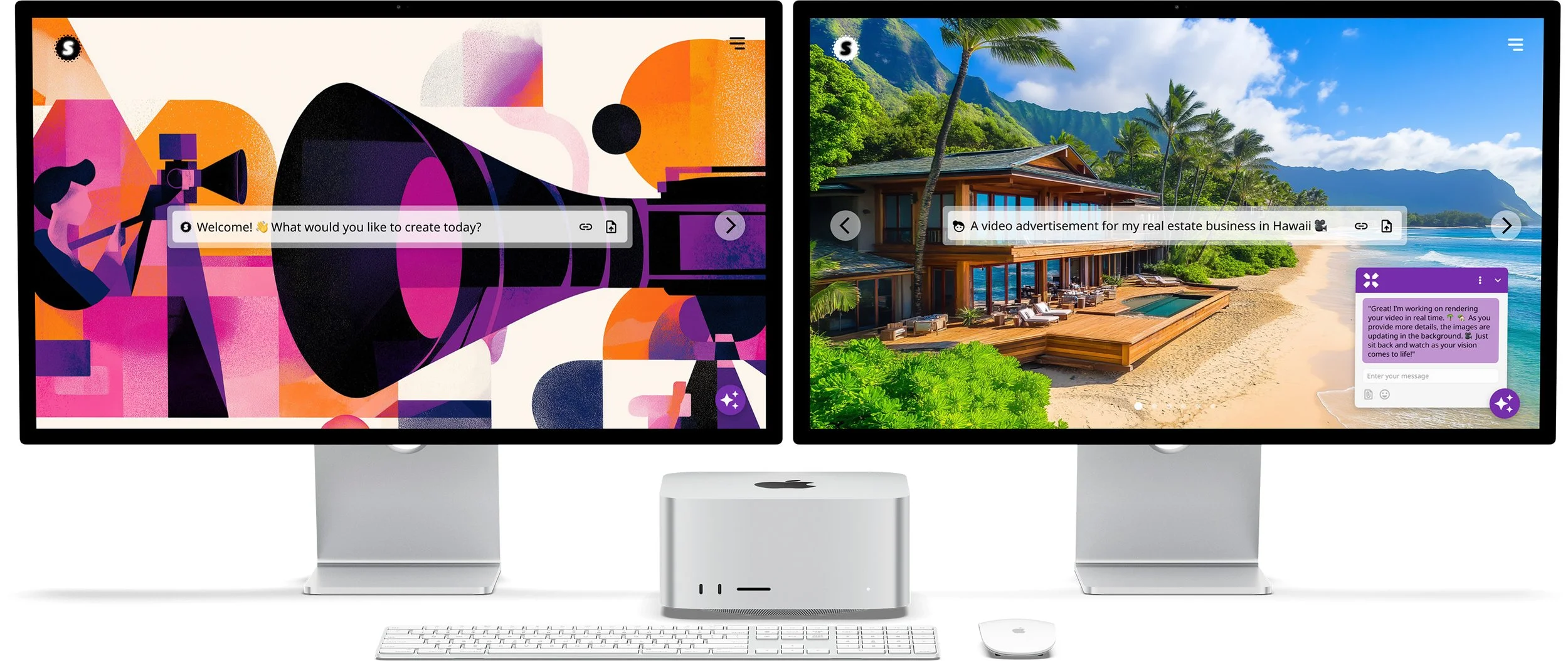
The desktop app, live
The preserved desktop build runs here as it shipped. Try the six-step conversation in the frame, or open it full screen.
Six conversational steps to a finished film
The desktop experience walks a first-time user from welcome to a finished, shareable video: subject, cast, location, visual effects, style, and story — each step conversational, with an AI assistant on call throughout.
Welcome — the wizard opens in plain language, no timeline in sight.
Every screen in the flow
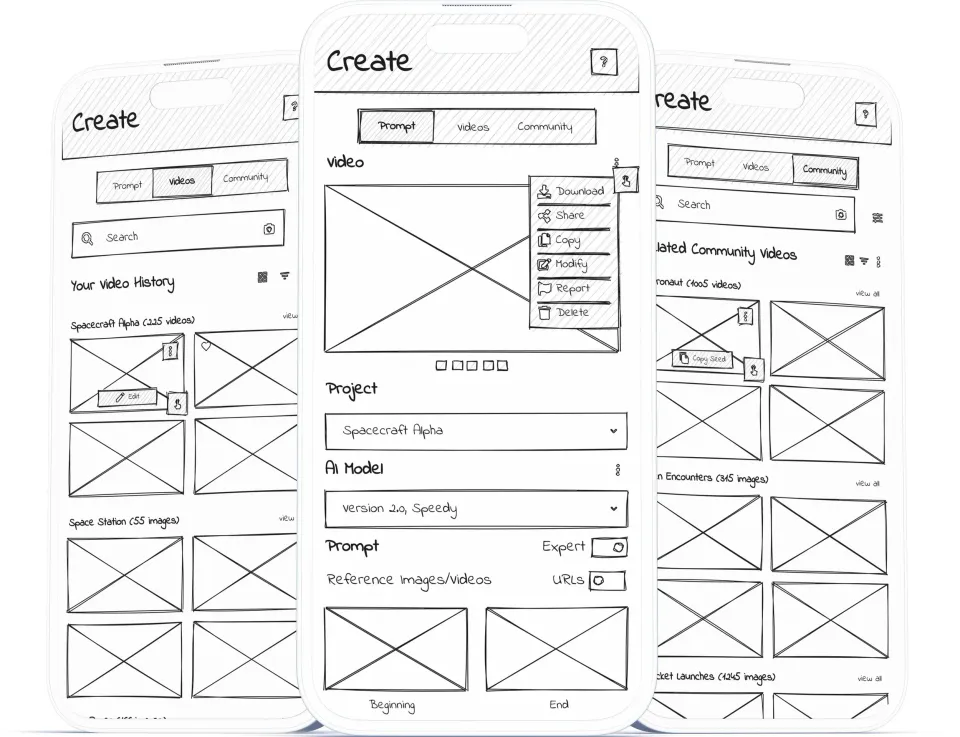
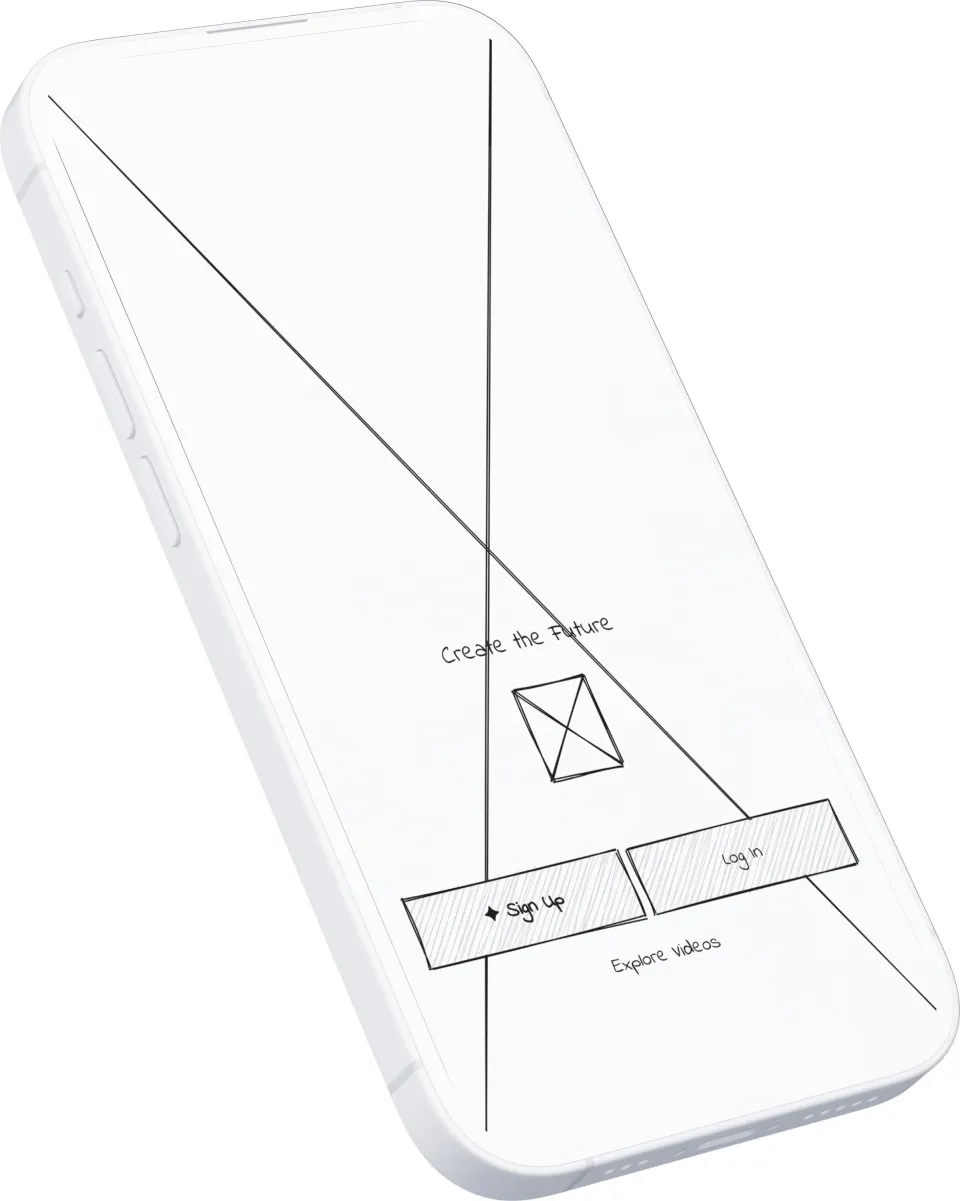
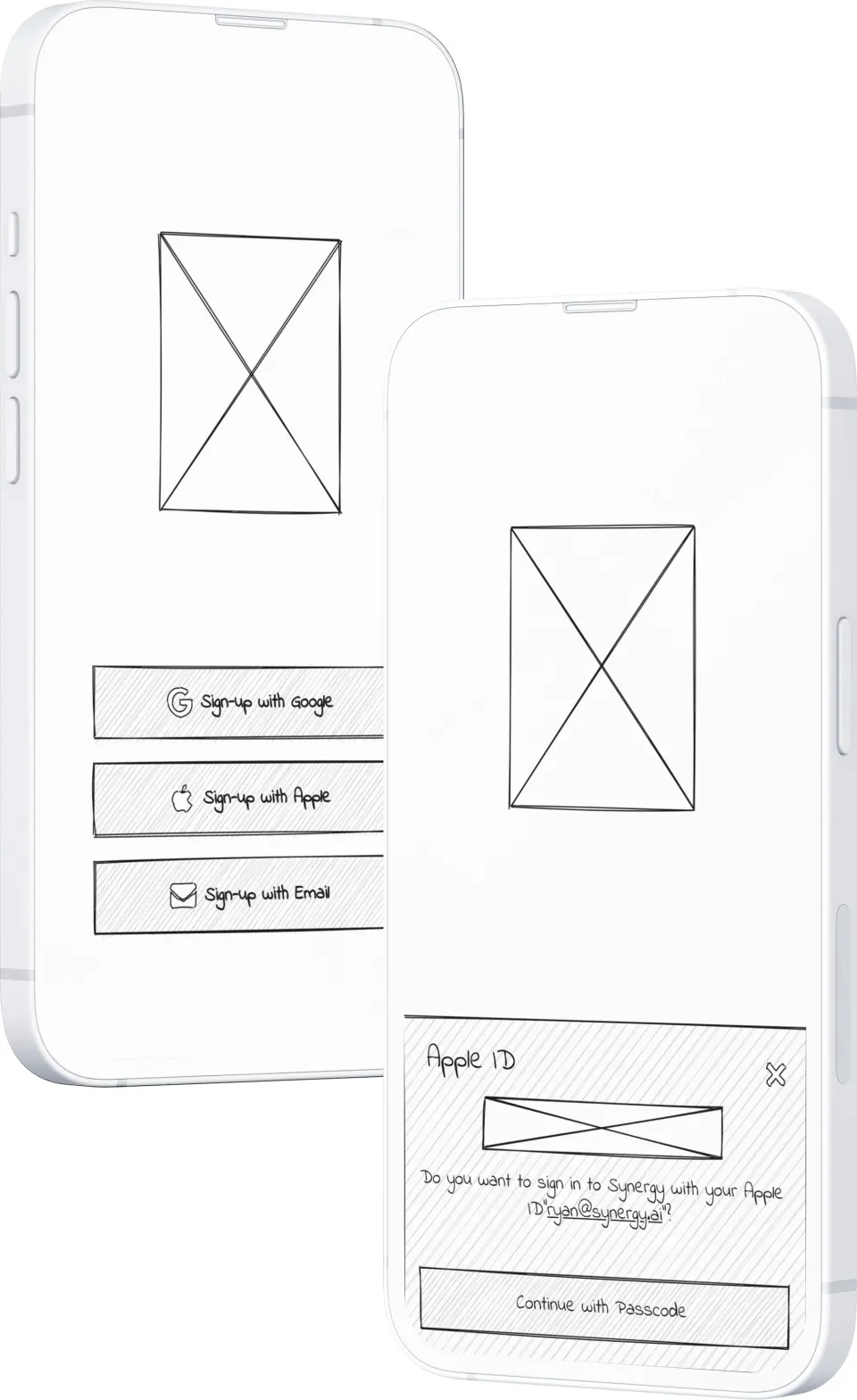
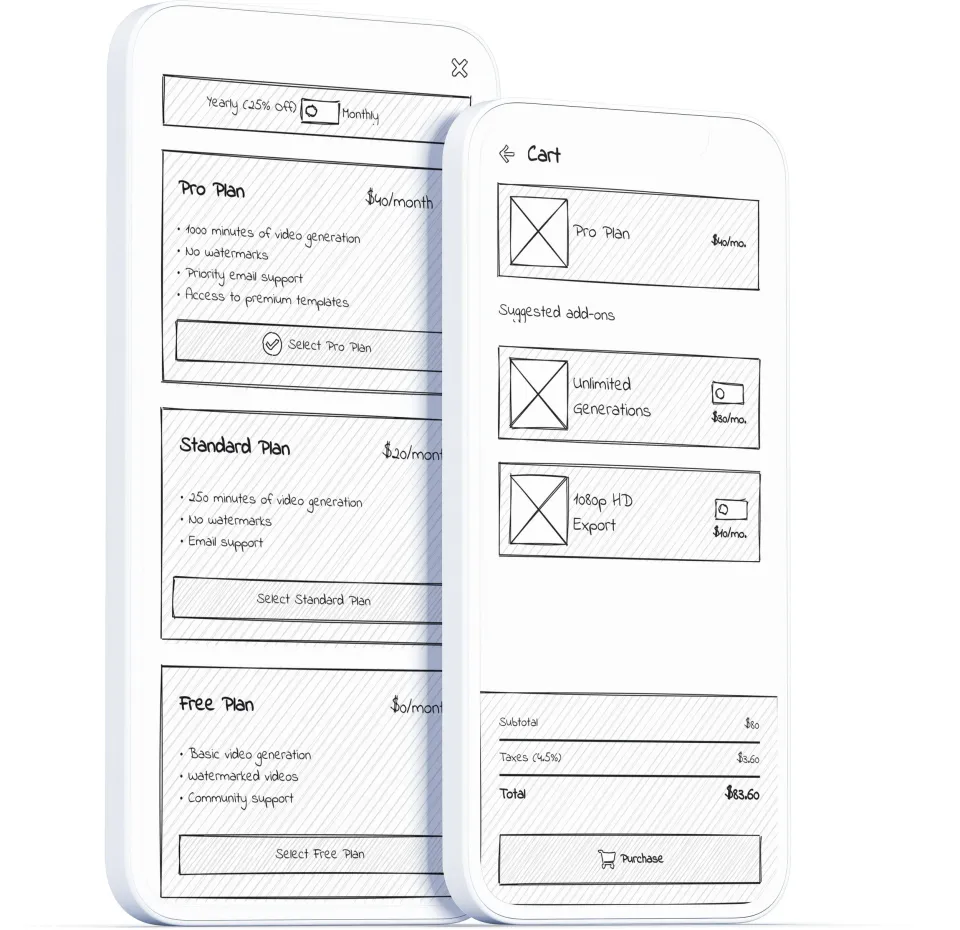
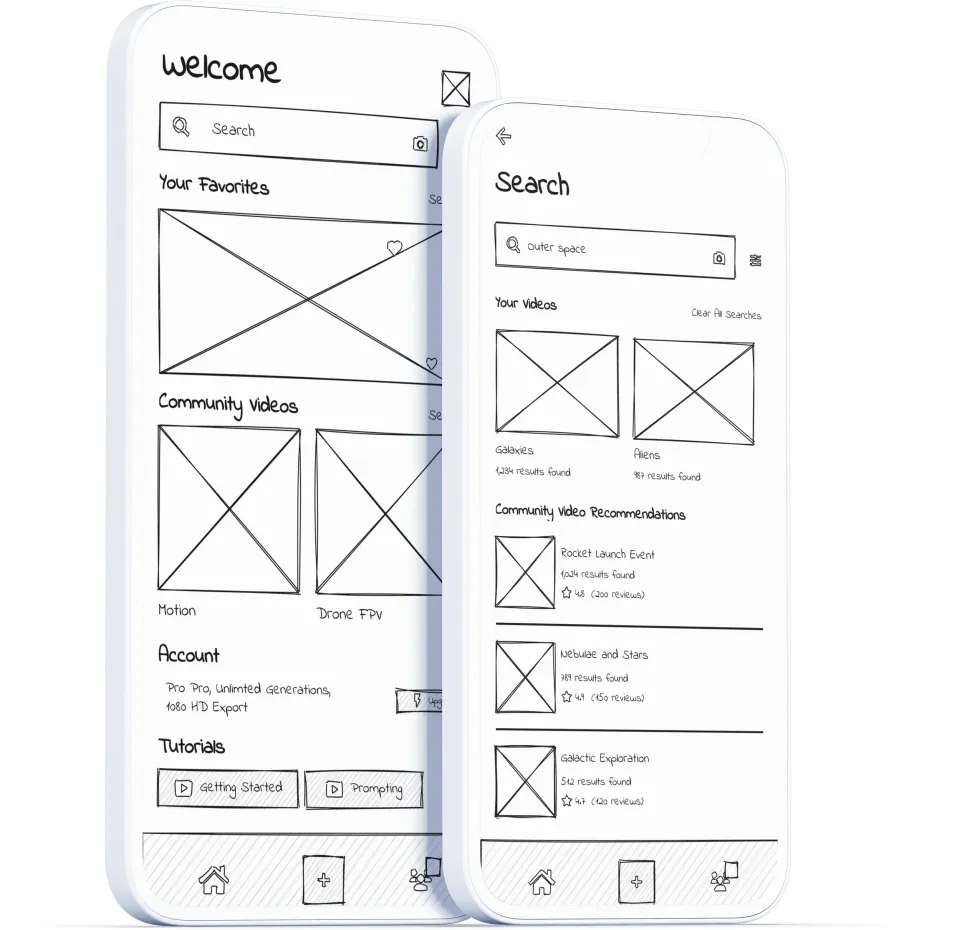
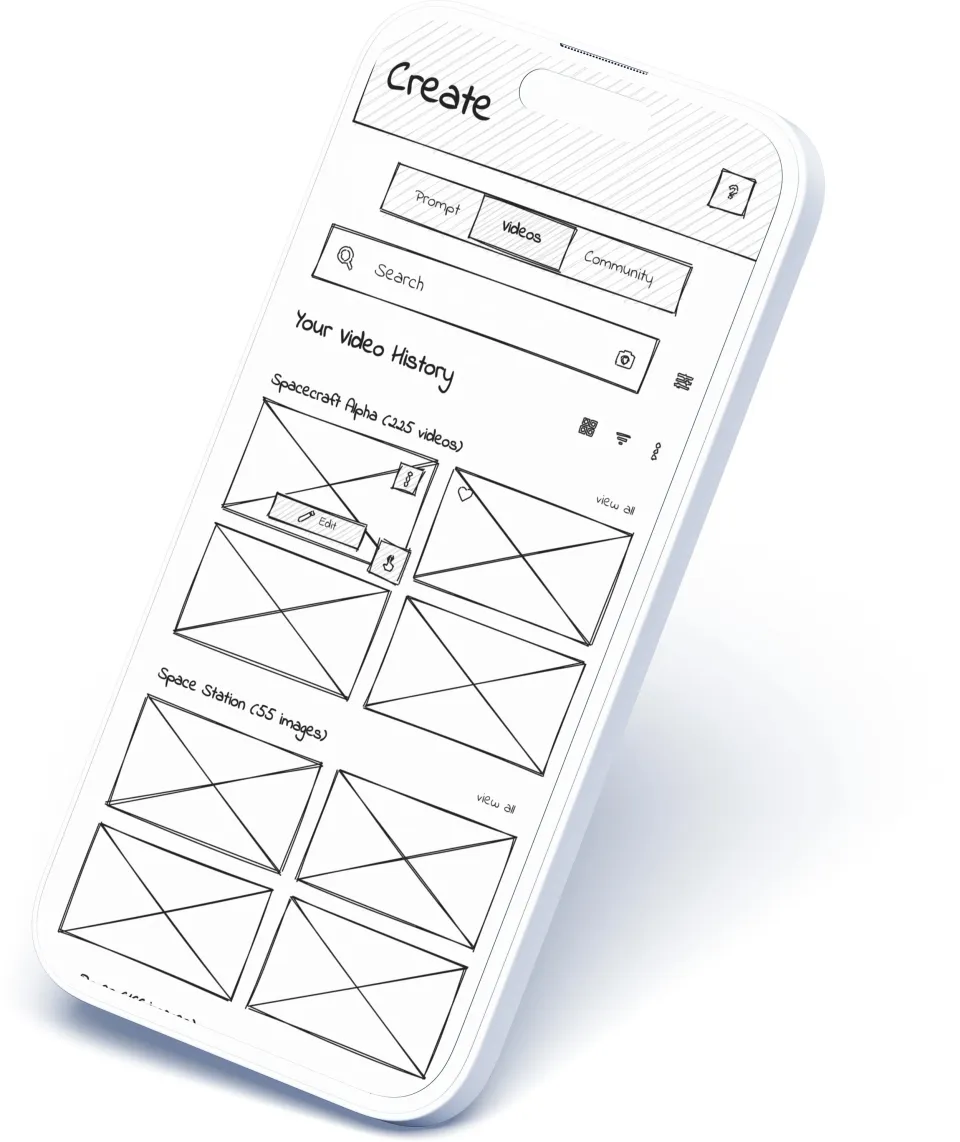
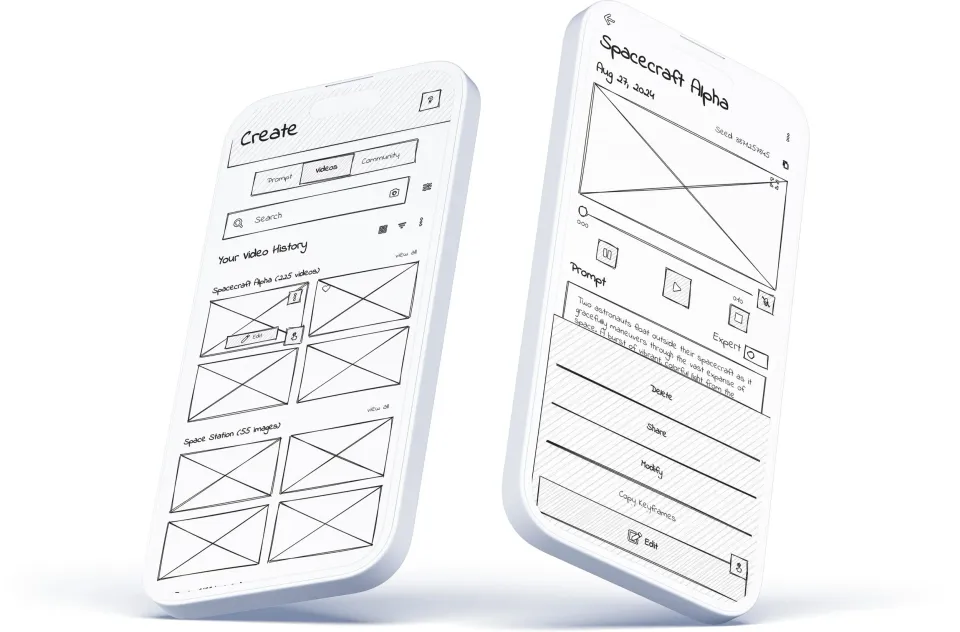
Design began on the phone, following iOS standards. The full mobile set — swipe through onboarding, subscription, creation, history, and the community hub, one screen at a time.
The mobile app at a glance.


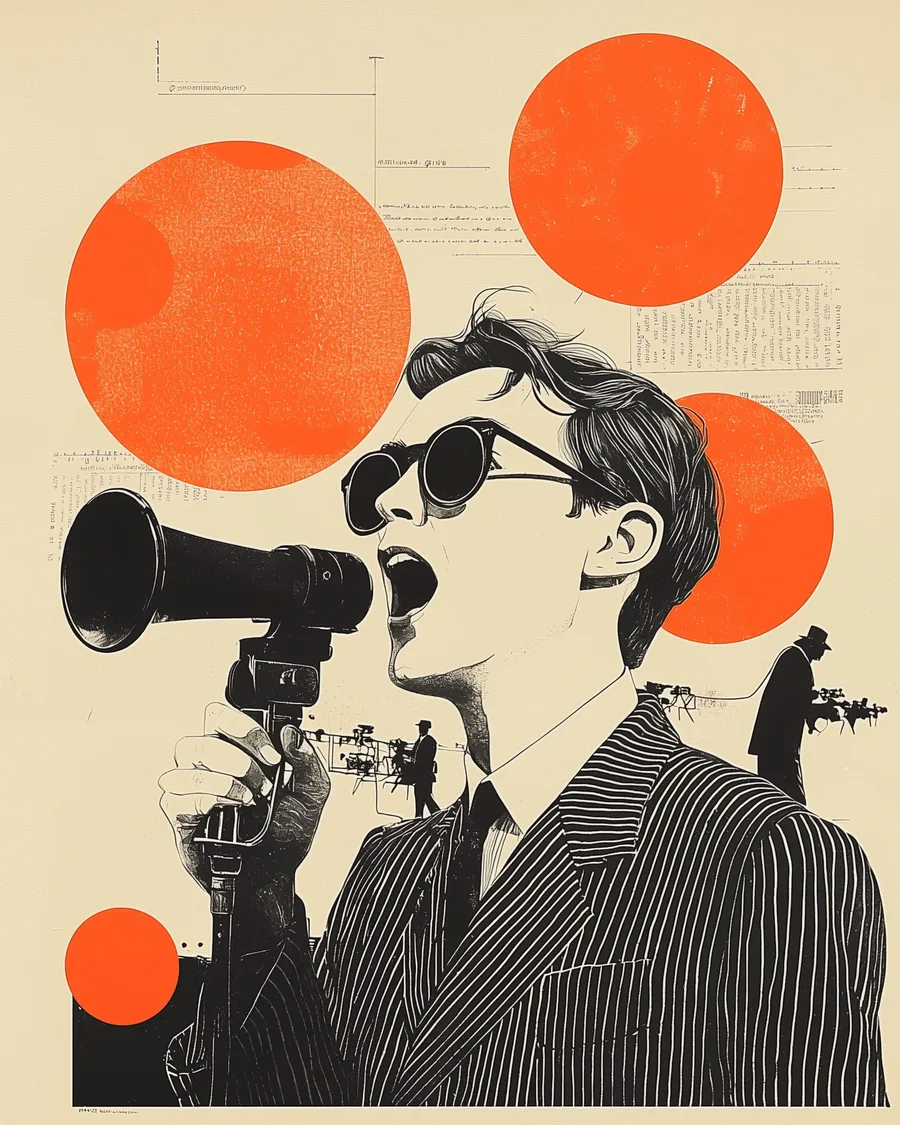
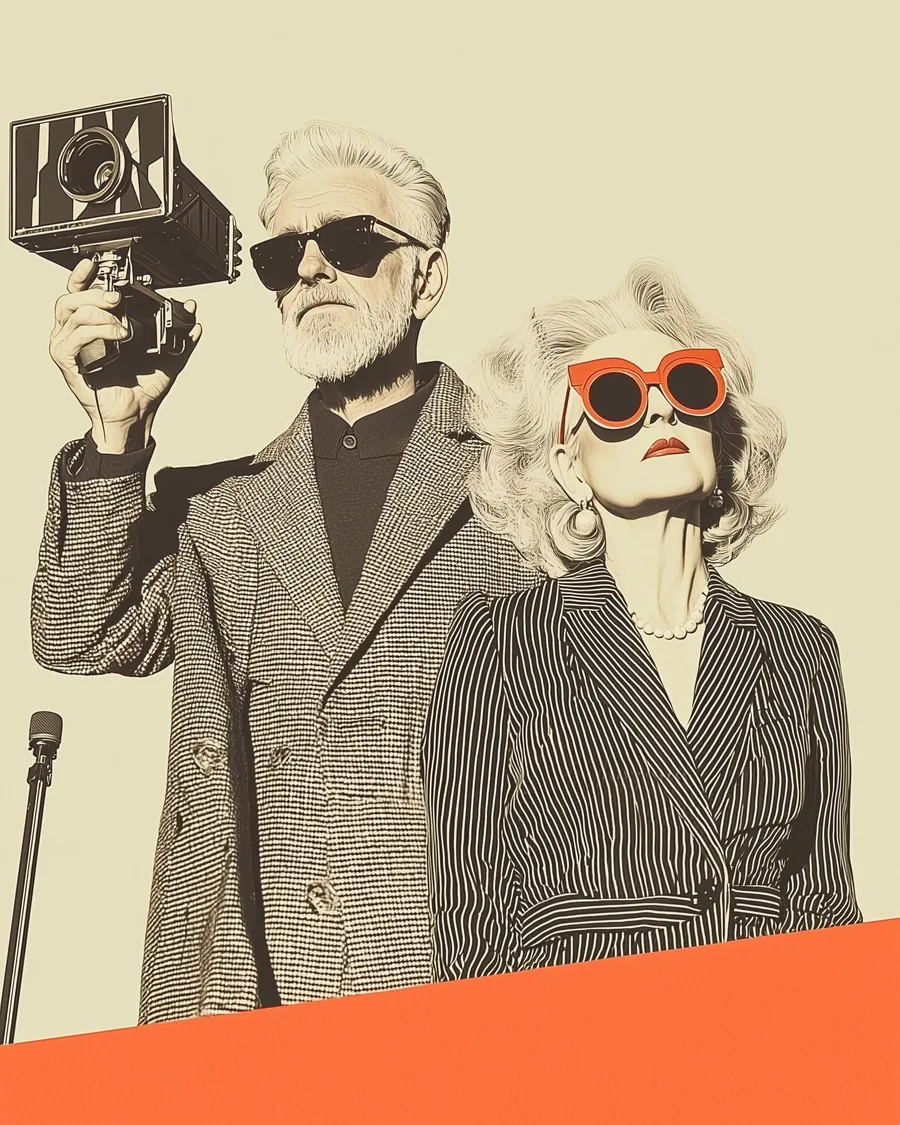
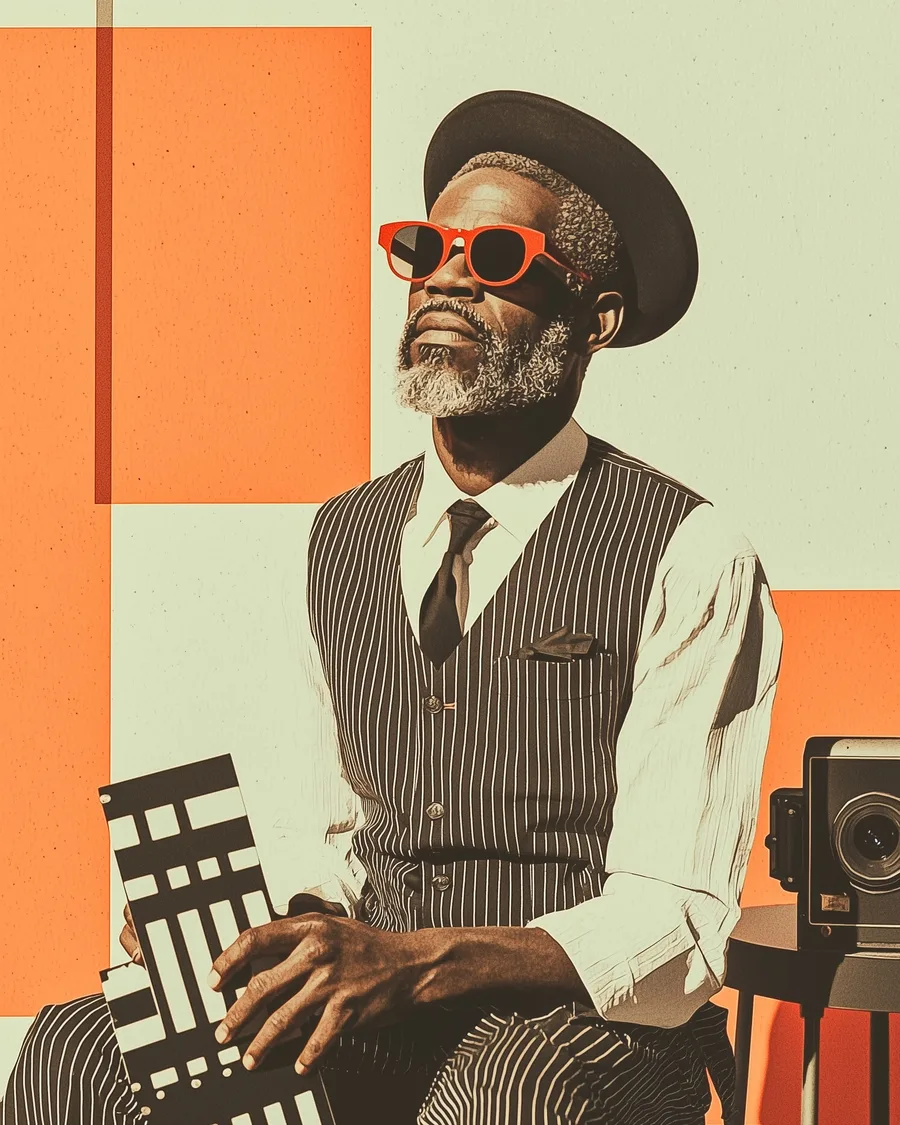
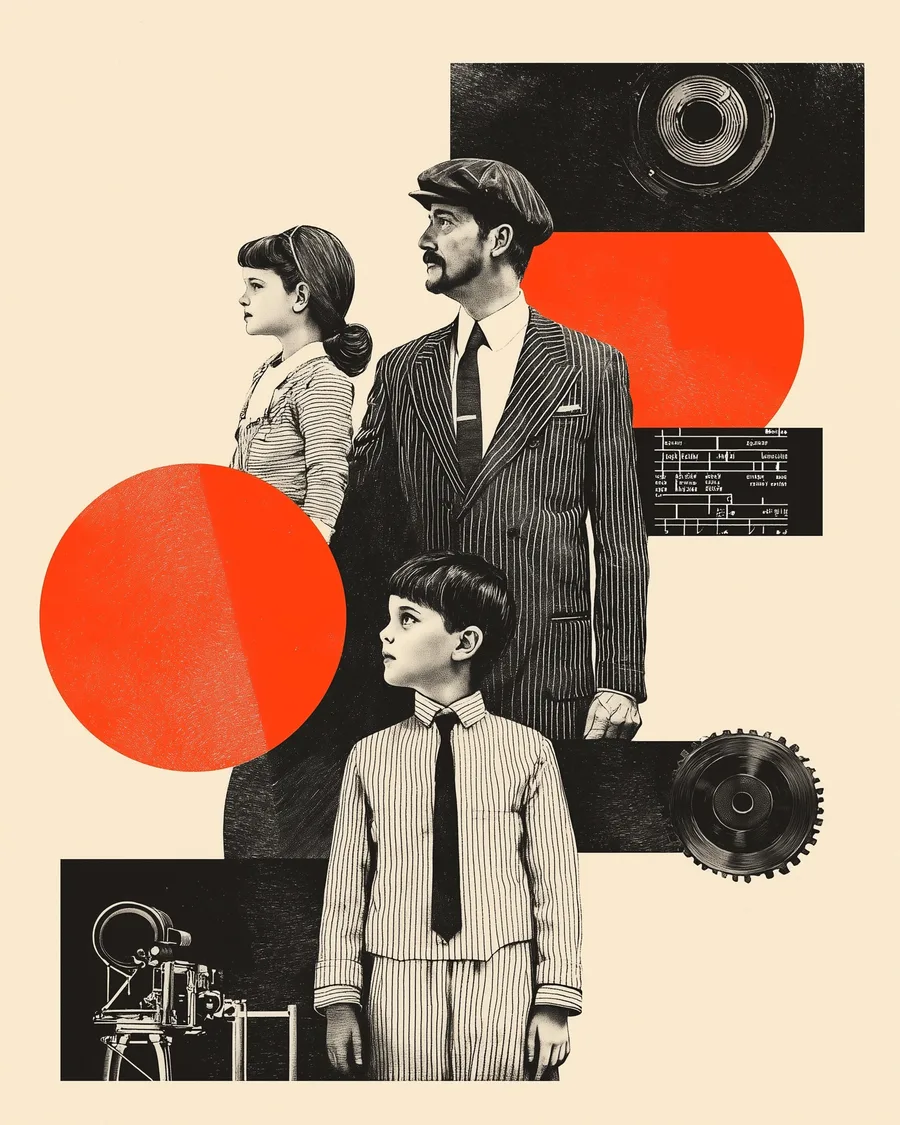
AI-generated ad concepts made with the product's own pipeline.
Design system
A token system carries color, dimension, animation timing, typography, spacing, and layering through every screen, so changing the brand color or a wizard panel's width is a single edit, not a hunt through components. The six-step flow itself is the clearest expression of it: the same layout and pacing whether a step asks for a location photo or a story beat.
Lo-fi wireframes to AI-fueled hi-fi
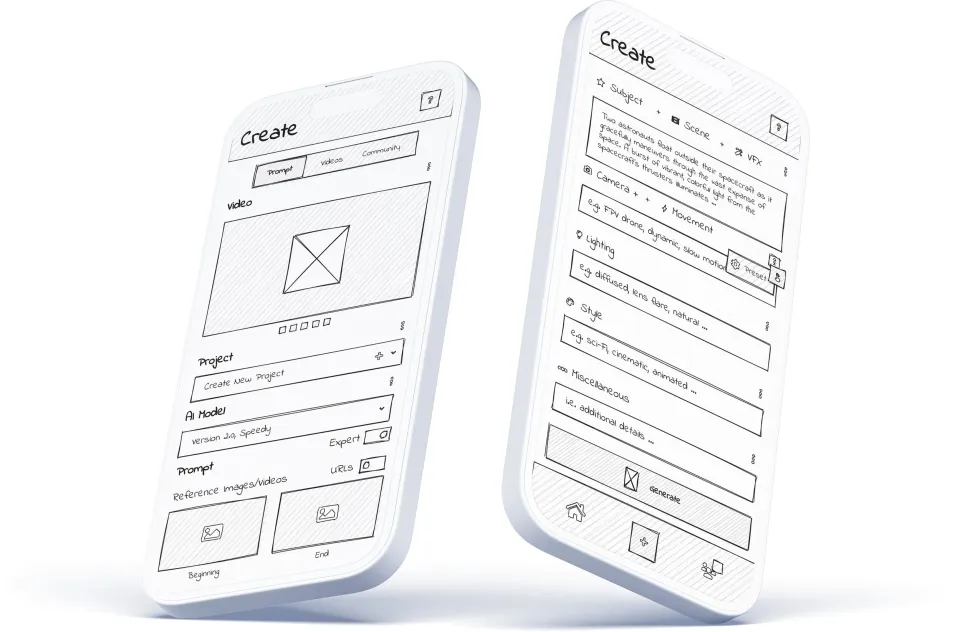
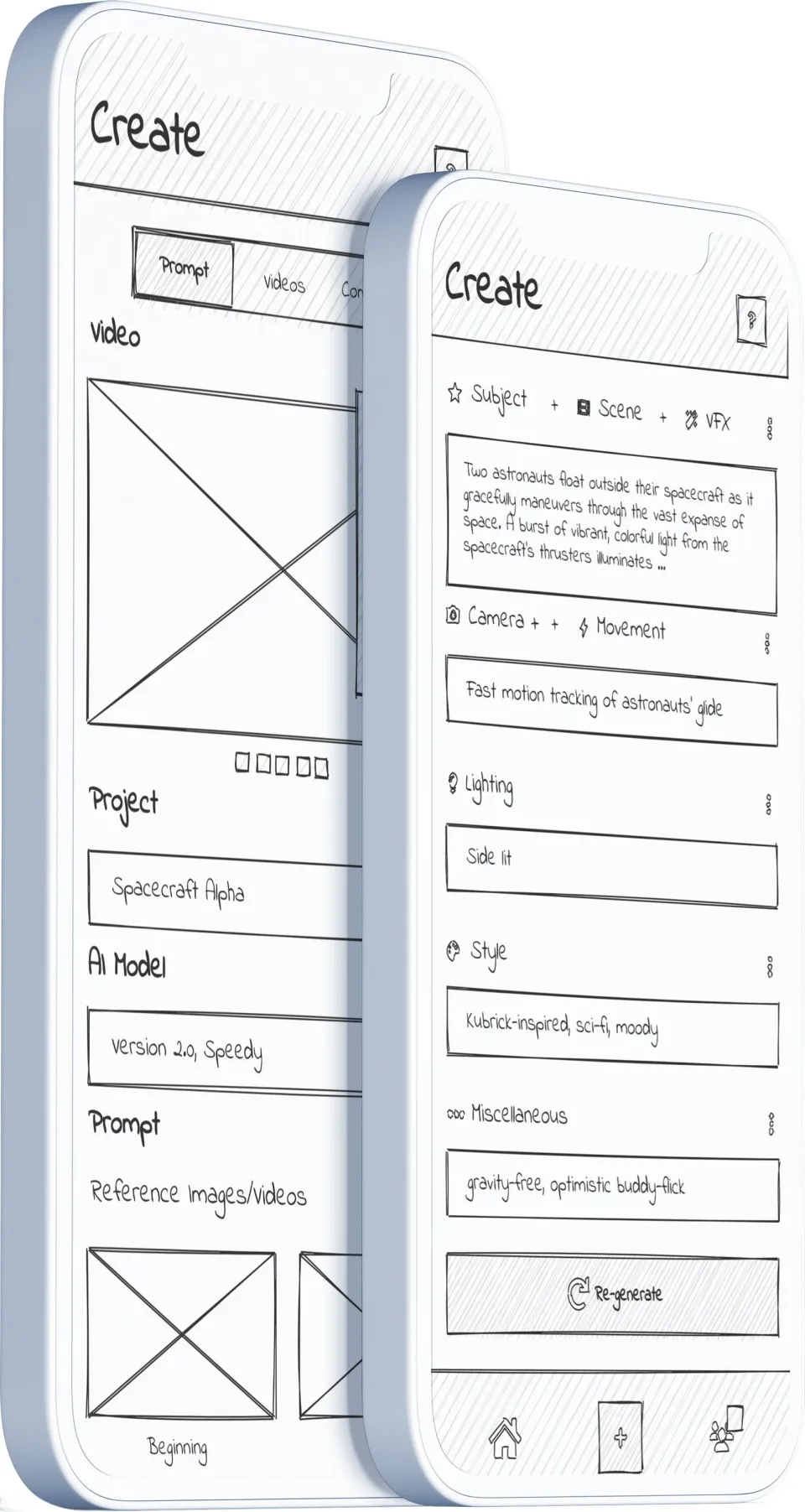
The journey started with low-fidelity wireframes and moved fast: high-fidelity visuals produced with generative-AI techniques, following iOS design standards throughout. Six of the desktop wireframes:
Synergy desktop wireframe 01 — early structure for the guided creation experience.
What shipped
The product runs live: a sign-in app with a conversational director rendering real multi-shot films, three quality tiers, a per-user film library, and generative fill plus a scene editor for people who want to go past the guided path. Zara's scenario, the one I designed hardest against, is six branded videos in under thirty minutes with no editing skills. That's the target the wizard is built to hit, the number the first study will measure.
The pipeline is proven, the users come next.
From my own product notes
What I learned
The build is deep and the research is next, and I'd rather say that plainly than let the case study imply otherwise. I chose to prove the pipeline first because a rendering engine that doesn't work makes every later question moot.
Honesty
What the build record can't answer
Proving the pipeline works only holds up if I'm honest about what it leaves unanswered: whether six questions actually beat a blank prompt for someone who isn't me.
The gate
The user study is the first gate
Six moderated sessions test whether a first-time user can finish a video unaided, before anything else on the roadmap.
If it fails
Rewrite before spending downstream
If that first study fails, I rewrite the wizard's steps and re-test before a dollar goes to community features or anything else.